Goal
My project started with quantifying how pitcher's can expand the strike zone to get more calls to their advantage, called strikes and swings at pitches that would otherwise be ruled balls. This aspect of the game is not usually analyzed, and I thought it would be interesting to see how pitcher's effectively do this and how it impacts the game.
Scope of Analysis
These were the main questions I asked when beginning my analysis:
- Does the strike zone change throughout the season?
- Does the strike zone stay consistent each year?
- Where and when are pitches called strikes outside of the zone?
- How does the count influence when batters will swing outside of the zone?
- How often do pitchers throw outside of the strike zone?
- Which pitchers are most effective at getting batters to swing outside of the zone?
Umpire Calls: Comparing the 'Set' Strike Zone to the 'Actual'
First, I wanted to see how umpires reacted to pitches thrown outside of the zone. Whether the pitcher intended to throw outside or not, umpires are not perfect and they can call pitches outside of the stike zone as strikes, to the pitcher's advantage.
Using data from the 2024 and 2025 season, I filtered it down to data that was not swung at, it was either a called strike or ball by the umpire. With this data, I used a genearlized additive model to get the
probability that a pitch would be called a strike based on its location. The boundary line for each month represents the 50% probability of the pitch being called a strike.
There was not enough data for October and November, so these months were not included in the modeling. Additionally, all data is in the perspective of a right-handed batter, since they are the majority of the dataset. For left-handed batters, I reflected their horizontal pitch location
so that they would share the same inside/outside of the zone as a right-handed batter.
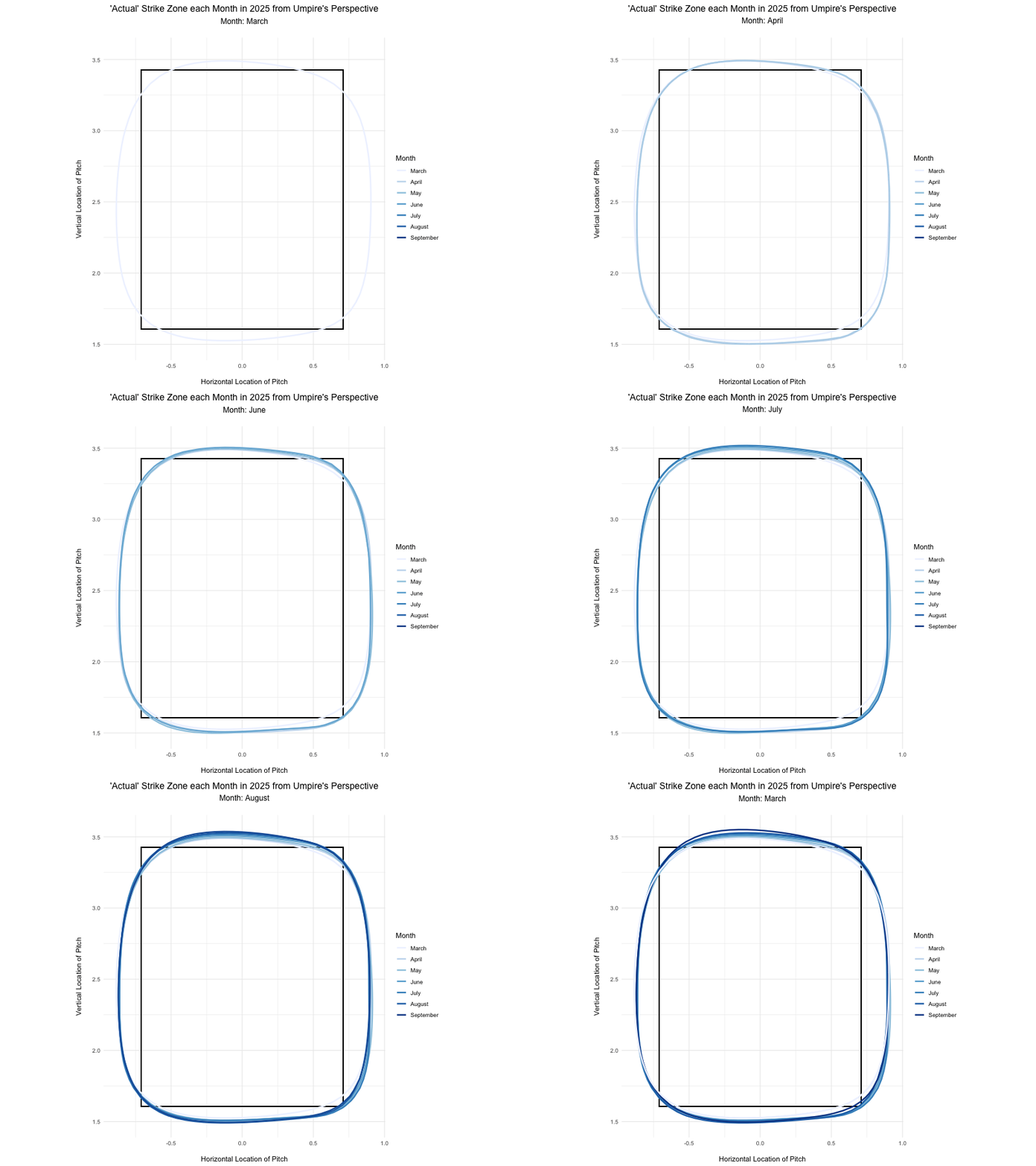
In general, as the season progresses, we see the boundary of the "actual" strike zone grow larger each month. Umpires seem to be more accurate on the bottom and inside of the zone. The outside of the zone (right hand side of the zone) tends to be larger than the inside of the zone.
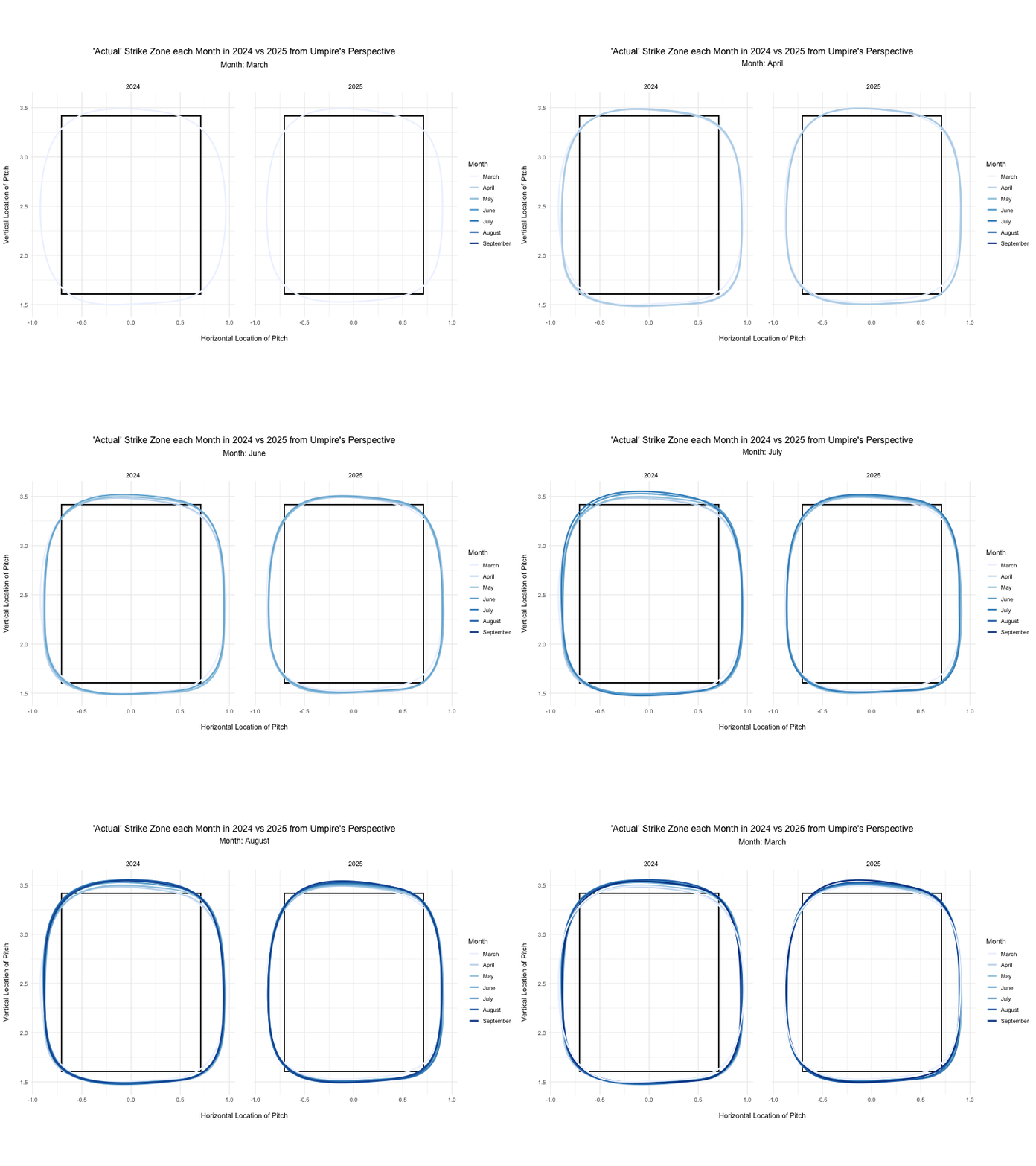
Since 2025 had an 'actual' zone closer to the 'set,' I would expect the 2026 zone to be even more accurate than what was observed in 2025. Additionally, I would expect zones to be tighter because pitchers, batters, and catchers can now challenge the umpire's ruling through the ABS challenge system.
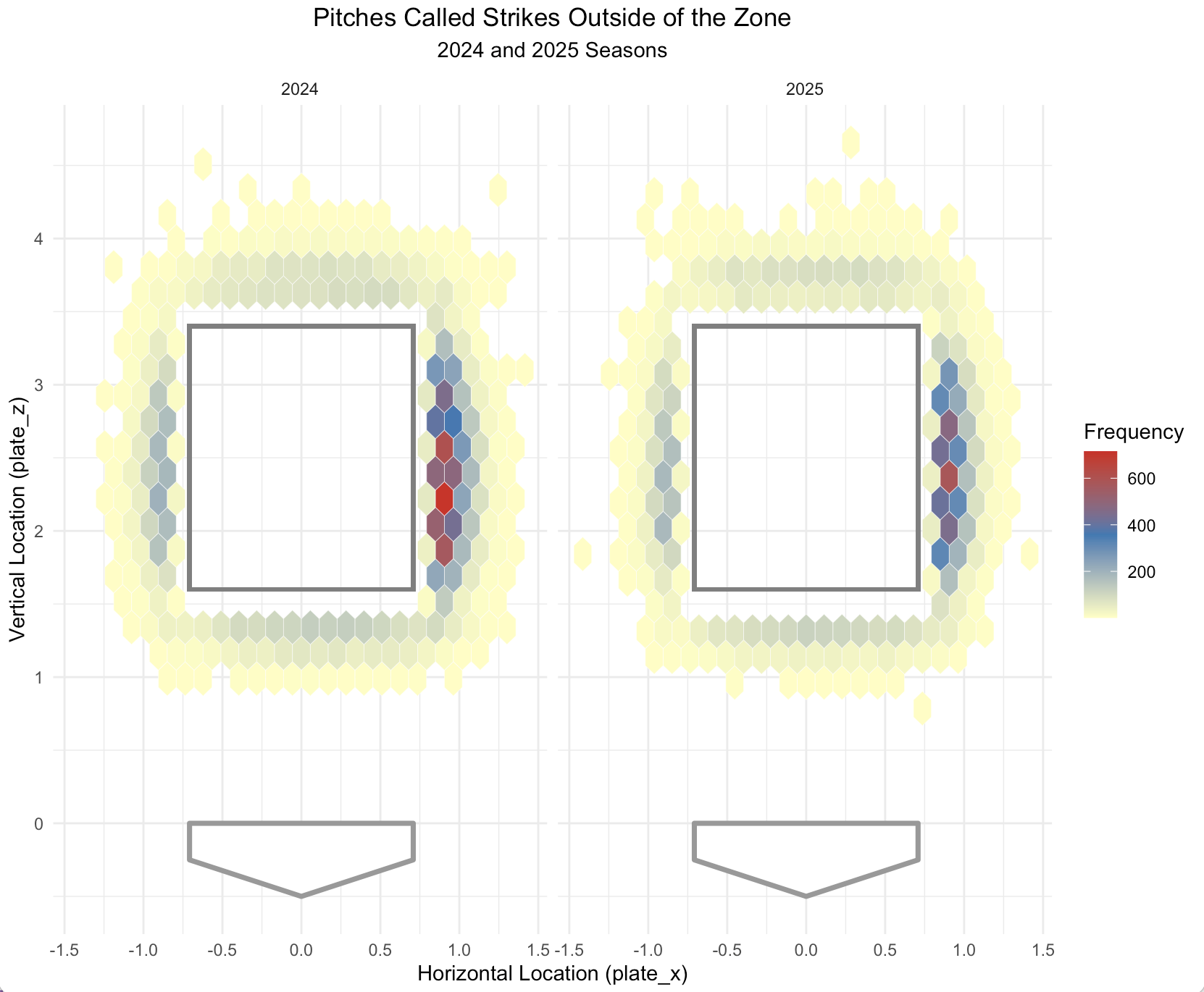
I filtered the data for both 2024 and 2025 to pitches where the pitch was at least 1 radius away from the edge of the zone. This location would not have any part of the ball touching the edge of the strike zone. Out of all pitches thrown outside:
2025: 4.6% called strikes (11,297 calls)
In both seasons, most of these calls occured on the outside zone. In 2024, there was slightly darker shading on the top and bottom of the zones, indicating again that umpires have been more accurate in those areas.
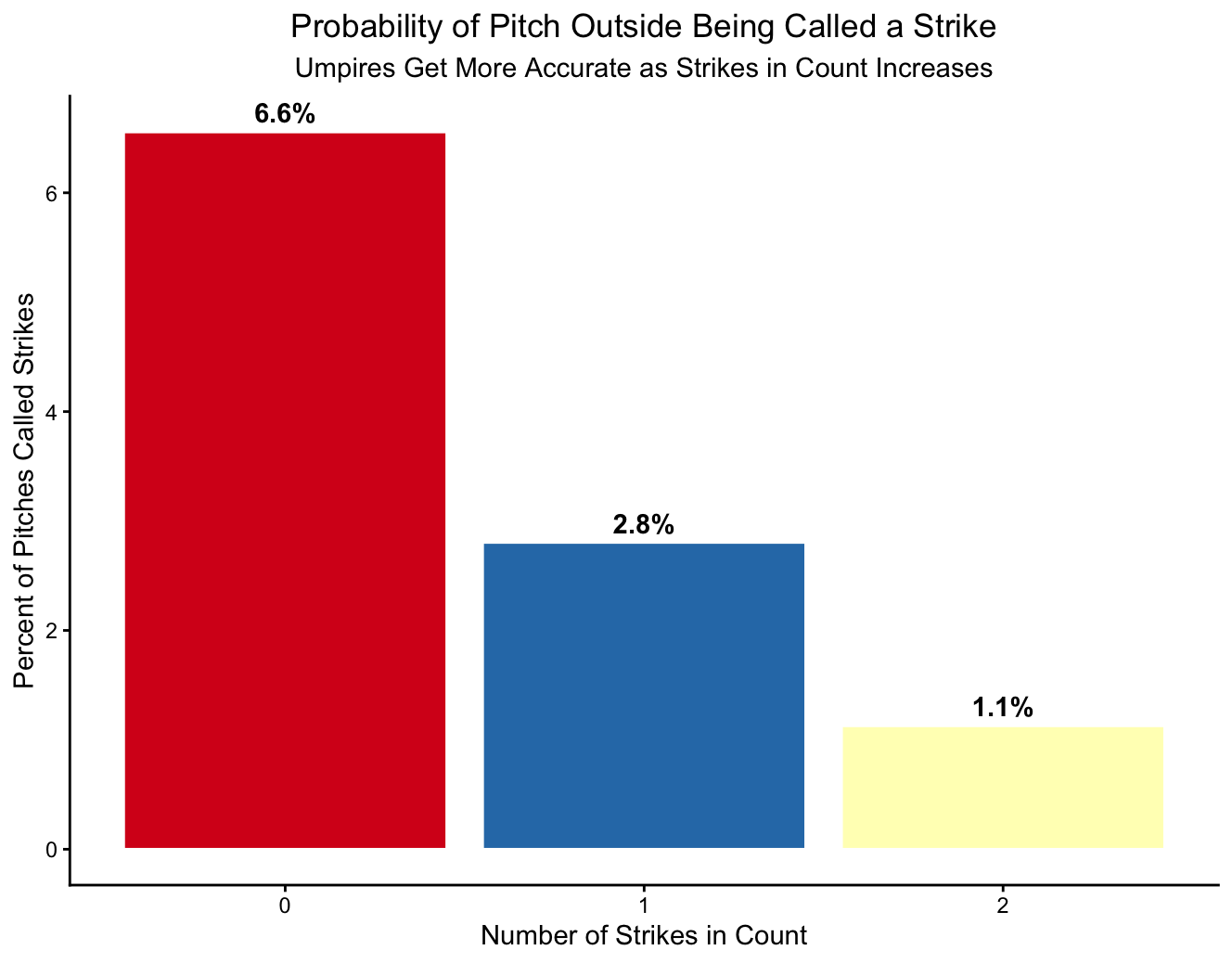
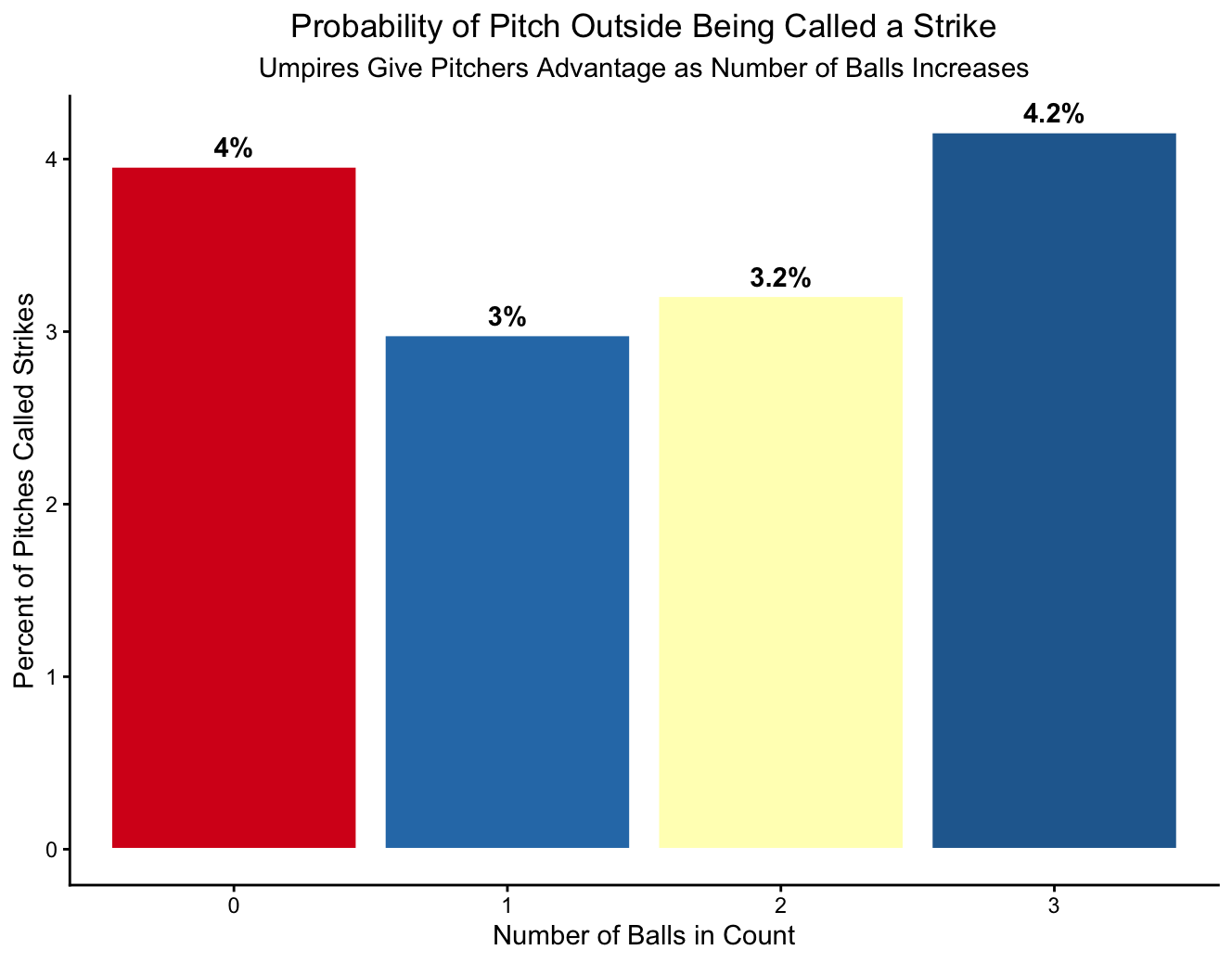 Using data from both seasons, as the number of strikes increases, the umpires are actually more accurate. Most called strikes outside of the zone occur when there are 0 strikes. Across both season, there were 2,862 called strikes on 2 strike counts, resulting in a strikeout for the batter.
This situation is crucial to call correctly, as these incorrect calls highly benefit the defense.
Using data from both seasons, as the number of strikes increases, the umpires are actually more accurate. Most called strikes outside of the zone occur when there are 0 strikes. Across both season, there were 2,862 called strikes on 2 strike counts, resulting in a strikeout for the batter.
This situation is crucial to call correctly, as these incorrect calls highly benefit the defense.
Batters:
Batters must quickly make a decision to swing after the pitch is thrown and be able to determine where it will land. This is especially difficult for pitchers with a lot of movement on their pitches.
On average, batters swung at pitches outside of the zone 28.2% of the time in 2024, and 27.9% in 2025.
The batter's current count is one of the major factors that determines when they will swing outside.
From the raw 2024 and 2025, we see that as the number of balls increases, the probability of swining decreases; as the number of strikes increases, so does the swing probability.
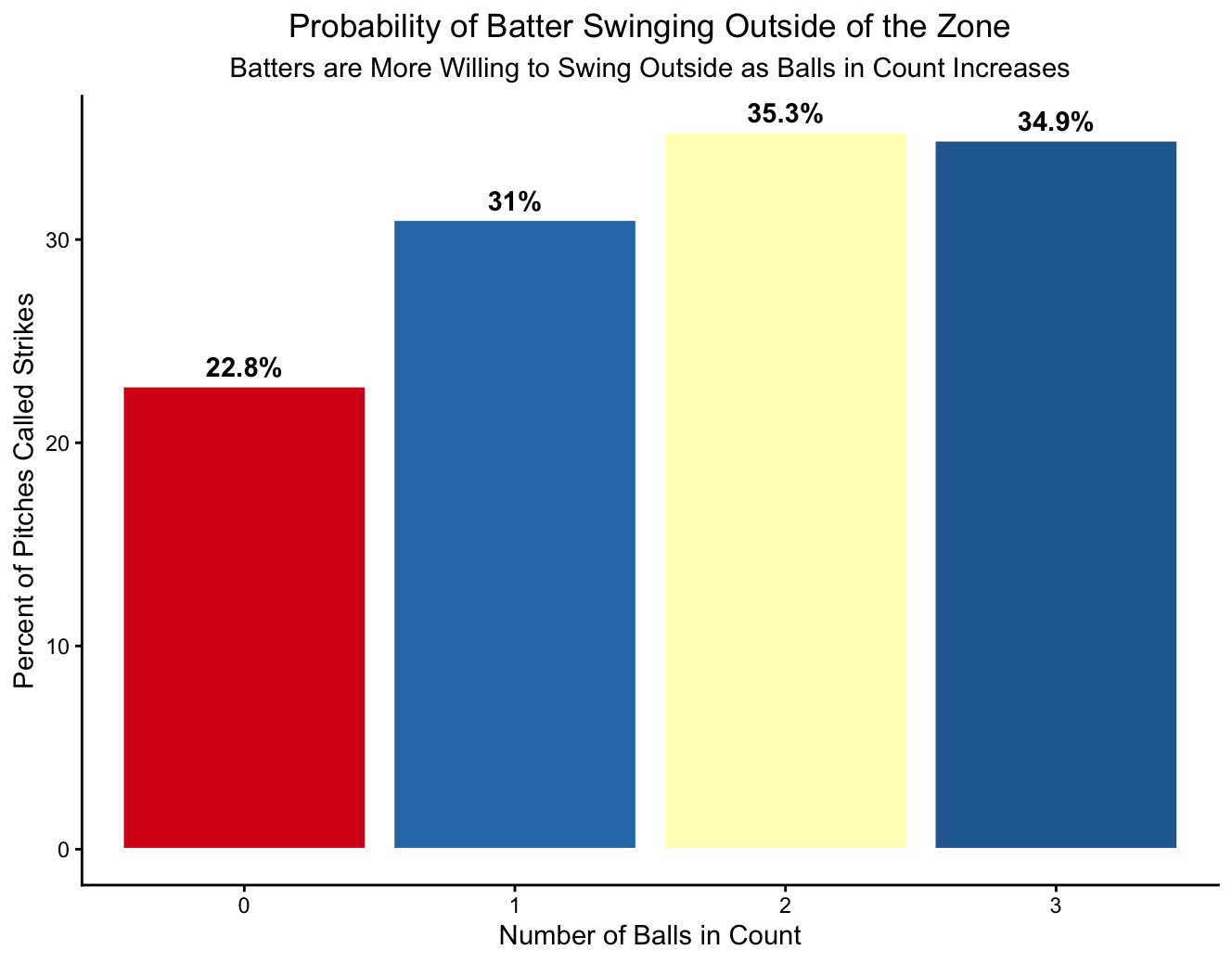 Batters are also more willing to swing if they already have 2 strikes in the count.
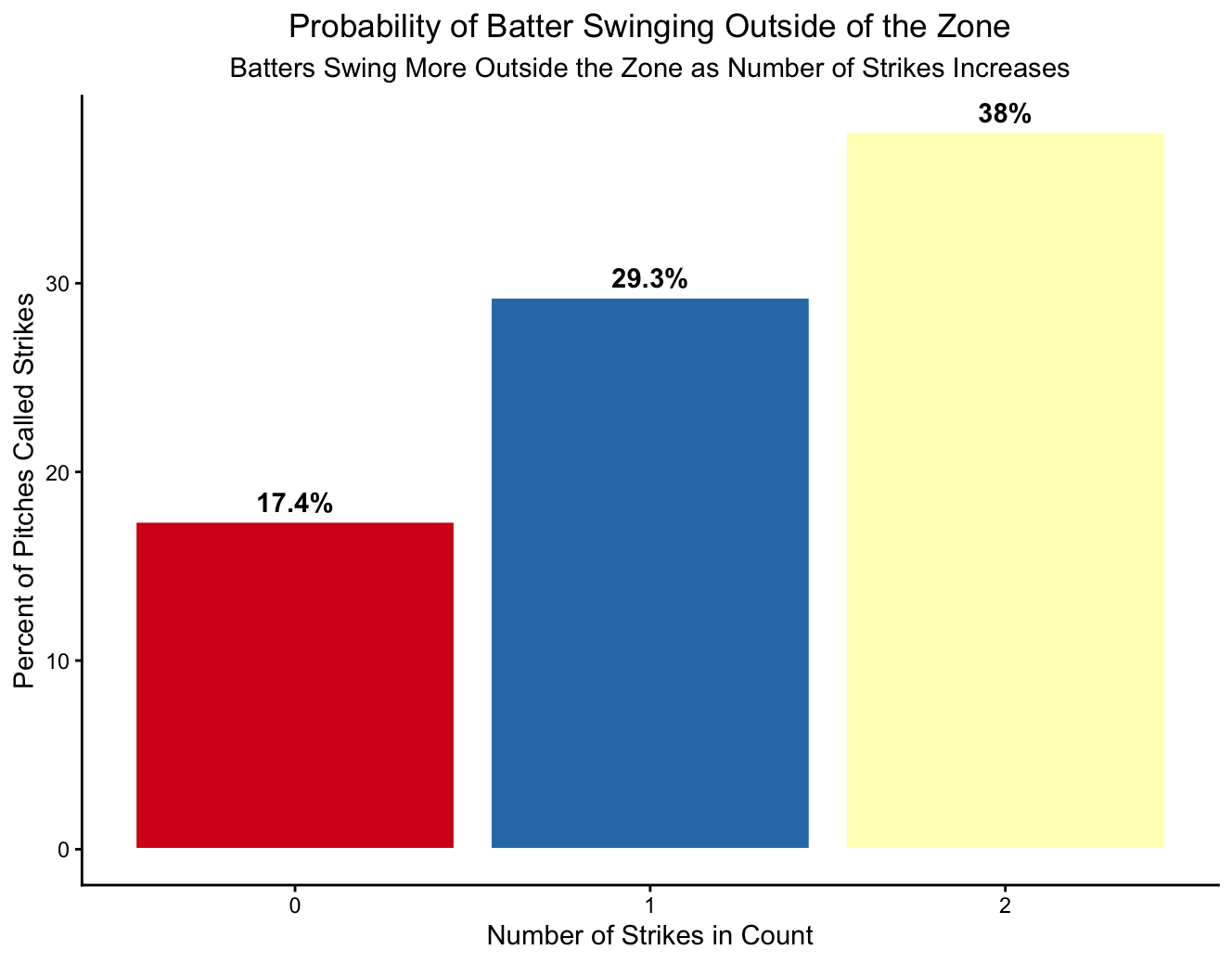
In both cases, for pitches outside of the zone, as the batter sees more pitches in the count, they are more willing to swing.
Pitchers:
Pitchers also have to decide when they want to target outside of the zone. This is dependent on the pitcher and game situation, but some pitchers are more successful at getting batters to swing, or drawing called strikes than others.
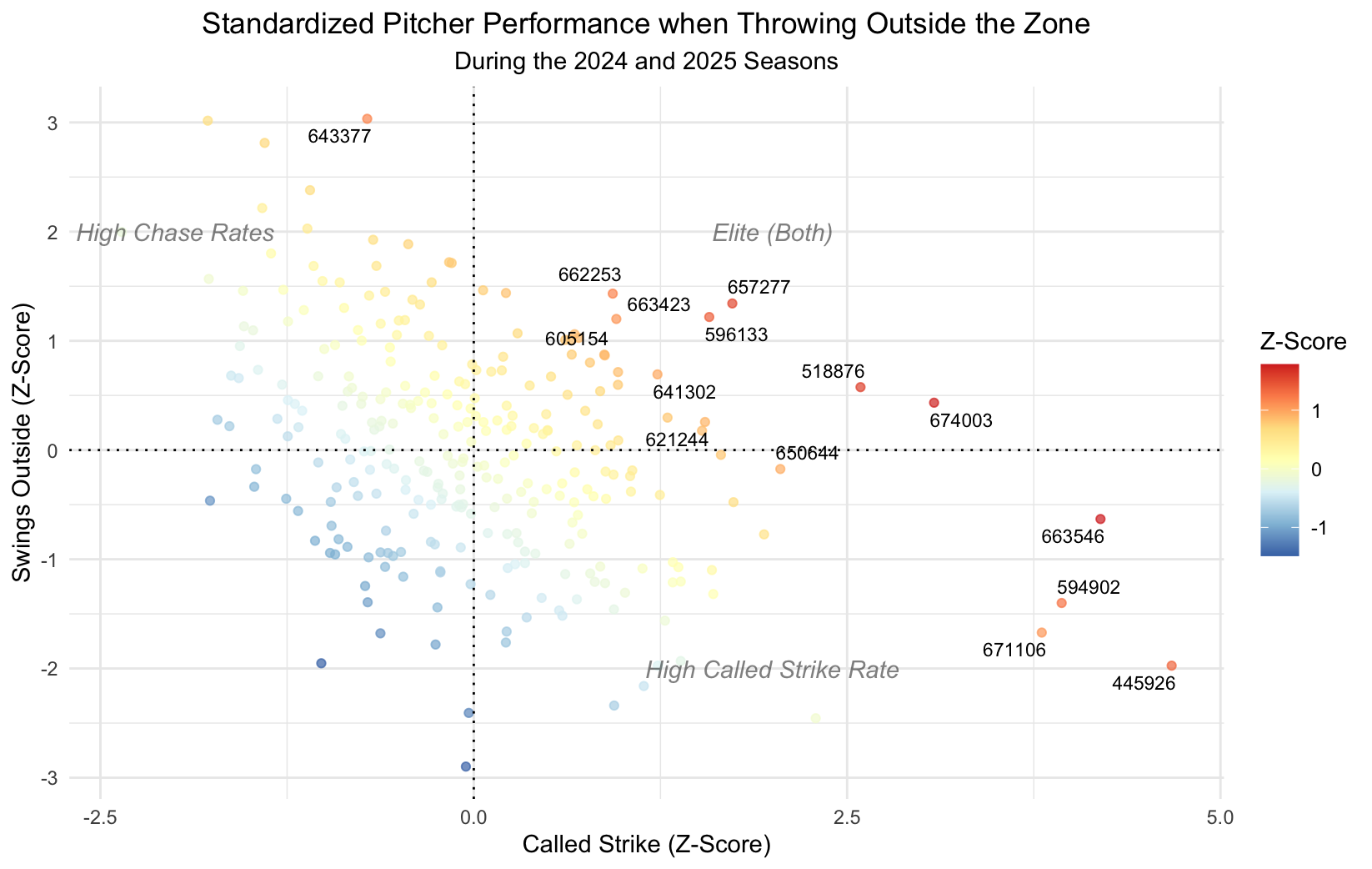
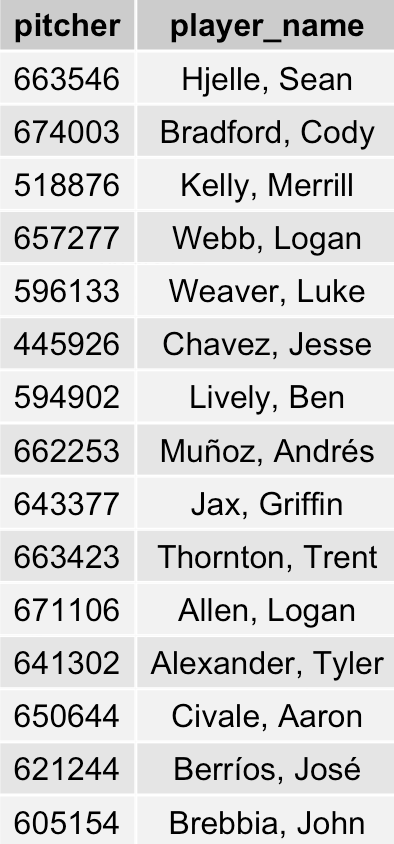
To evaluate pitchers on an equal scale, I calculated a z-score for each pitcher's rate of called strikes and swings when throwing outside of the zone. This method references the following
FanGraphs article.
The top right corner holds pitchers who can get calls outside the zone and have high chase rates. Pitchers in the top left corner have high swing rates, but are not as favored by the umpire.